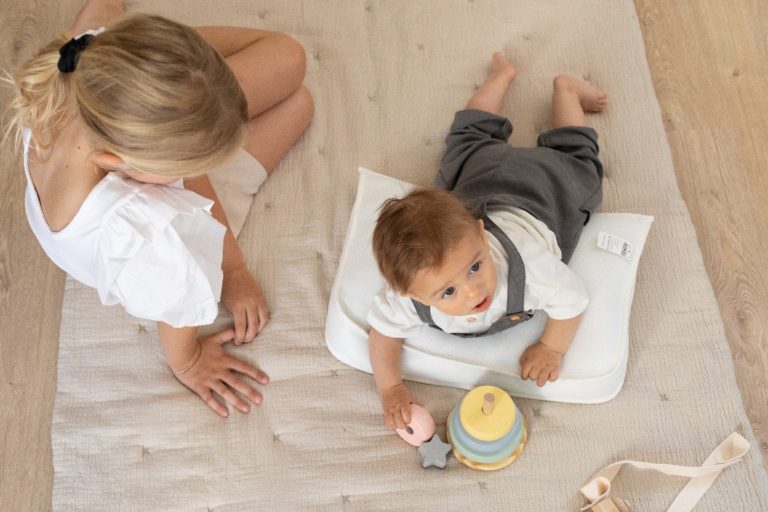
Tummy Time is one of the most important activities for your baby’s health and development.
Tummy Time is the act of placing a baby on their tummy, which serves as an early physical activity that significantly contributes to the baby’s development and motor skill formation.
Placing a baby on their tummy should only be practiced when the baby is AWAKE. The Safe Sleep Program recommends putting babies to sleep on their backs to prevent sudden infant death syndrome (SIDS). You can place the baby on their tummy on the floor, on your chest, or another comfortable surface for the baby. Never leave the baby unattended. Approach this activity creatively.
Placing a baby on their tummy offers many benefits for the little one: it promotes muscle development, overall growth, and gross motor skills that will be crucial for sitting, crawling, and later walking. It also helps improve head control and strengthens the upper body.
Another important benefit is that it relieves pressure on the baby’s head, which occurs when they spend extended time lying on their back (as they do in cribs, strollers, baby loungers, car seats, in a caregiver’s arms, on play mats, etc.). This practice helps prevent and correct flat head syndrome.
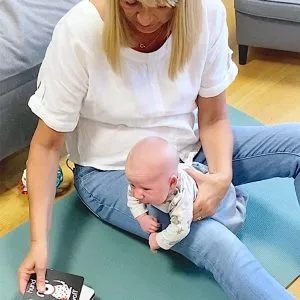
Why is Tummy Time important?
Placing a baby on their tummy offers numerous benefits for their development: it promotes muscle growth, overall development, and gross motor skills, which are essential for sitting, crawling, and later walking. Tummy time also helps improve head control and strengthens the upper body. Another significant advantage is that it relieves pressure on the back of the head, which occurs when a baby spends too much time lying on their back—whether in a crib, stroller, bouncer, car seat, on a caregiver’s arm, or on a play mat. This practice helps protect and even correct a flat head shape.
When can you start?
The earlier you start placing your baby on their tummy, the more comfortable and natural this position will feel for them. That’s why it’s recommended to introduce tummy time from the very beginning. For instance, if a newborn spends a short amount of time (2–3 minutes) on their tummy after waking up, it becomes a natural part of their daily routine.
When babies are on their tummy, they learn to roll, crawl, and scoot across the floor. Research shows that babies who spend little or no time on their tummy tend to develop motor skills later and may experience developmental delays.
Placing your baby on their tummy should become part of their routine and daily life from the very first days.